


 로그인을 해주세요
Neuro에서 중요한부분들이 너무나도 많지만 그 중에서 오늘 정리하고 싶은건 (특히 Neuro 파트 중 이번주 시험범위였어서..) Multiple Sclerosis (MS)랑 Parkinson’s disease! 사실 둘 다 이름은 너무 익숙한데 매번 조금 헷갈리는 부분들이있어서 이번 기회에 제대로 정리해보기로!
핵심개념정리
-
Multiple sclerosis: depending on the location of lesions - patient can have sensory or motor deficits
Brain lesions: visual loss & sensory disturbances (parethesia) → 학교에서는 이 두증상이 MS의 initial symptoms이라고했다
- spasticity, emotional lability, dysarthria(slurred speech), dysphagia, cognitive impairment
Brain stem lesions: autonomic dysfunction & abnormal ventilatory drive
Spinal cord/cerebellum lesions: limb paresthesia, weakness/fatigue, ataxia (gait disturbances), bowel and bladder symptoms
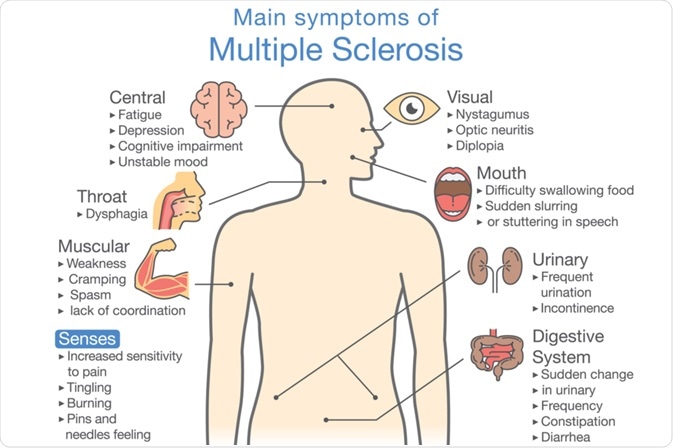
-
Main symtoms들 다 알고있어야하지만 특히 선생님께서 Senses & Visual을 별표하셨다!!!
Nursing interventions:
-
Assess and manage MS-related symptoms such as pain, fatigue, and bladder dysfunction
-
Conduct fall risk assessments and implement strategies to minimize the risk of falls
-
Assess the need for safety measures - provide braces, walkers, or wheelchairs
-
Accept when patient is unable to perform daily activities due to fatigue
-
Place an eye patch to help manage double vision
-
Encourage regular bladder and bowel elimination
-
Promote energy conserving techniques
- Priotize essential activities in the morning to conserve energy for the most important tasks
- Plan daily activities and schedule rest periods throughout the day
-
Offer emotional support and counseling to help patients cope with the emotional challenges of MS
-
Avoud precipitating factors - stress, extreme temperature, infection
-
Administer medications as indicated
- Corticosteroids: administered during acute exacerbations to reduce inflammation; does not cure the disease
헷갈린문제
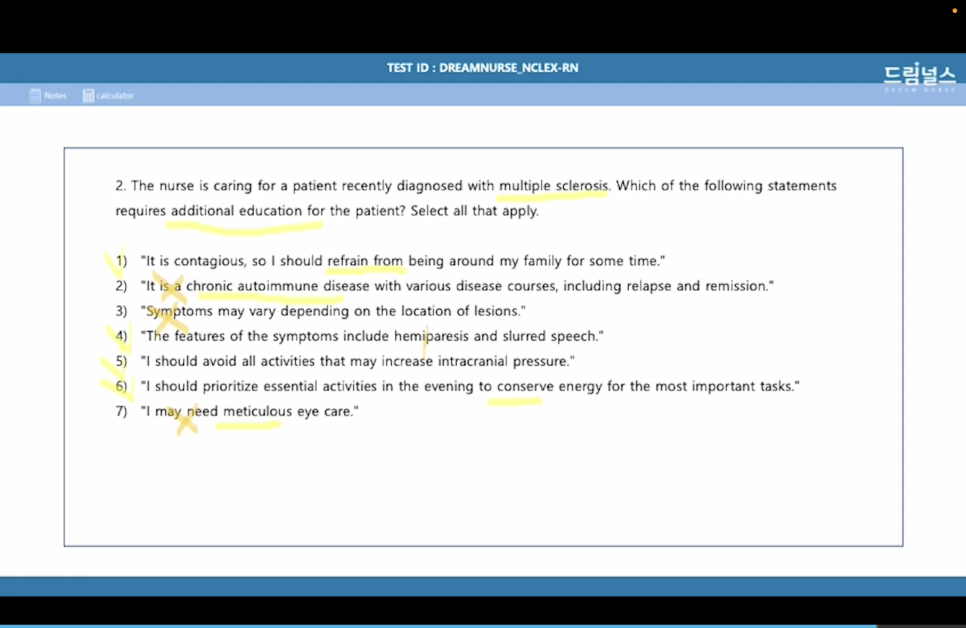
requires additional education” = 환자가 잘못 이해한 것 고르기 , 즉 틀린답을 고르는 문제!
1) MS는 전염성 질환이 아니기때문에 틀린답으로서, 추가적인 교육필요!
2) chronic autoimmune disease with relapse/remission (O)
3) lesions 위치에따라 증상이 같음 (O)
4) hemiparesis라서 헷갈렸다ㅜㅜ 일단 단어가 낮설었고 slurred speech는 증상 중하나긴하지만 hemiparesis때문에 헷갈렸달까..?근데 선생님께서 이건 뇌졸증의 대표적인 특징이라고하심..여기서 의문점은 MS도 CNS에 속하기때문에 motor weakness나 slurred speech가 나타날 수 있어서 MS의 증상이라고 생각했다ㅠㅠ
5) MS는 ICP와 관련된 질환이아님으로 추가적인 교육이 필요하다고 생각했는데 맞는거라고해서 헷갈렸다ㅠㅠㅠㅠㅠㅠㅠㅠ ICP 증가를 피해야 하는 질환은 MS가 아니라 brain injury 쪽이라서 이건 MS 환자 교육으로는 부적절함으로 추가 교육 필요한것..
7) MS가 eye care필요한건아는데 meticulous를보고 순간 헷갈렸다ㅠㅠ
2. Parkinson's Disease
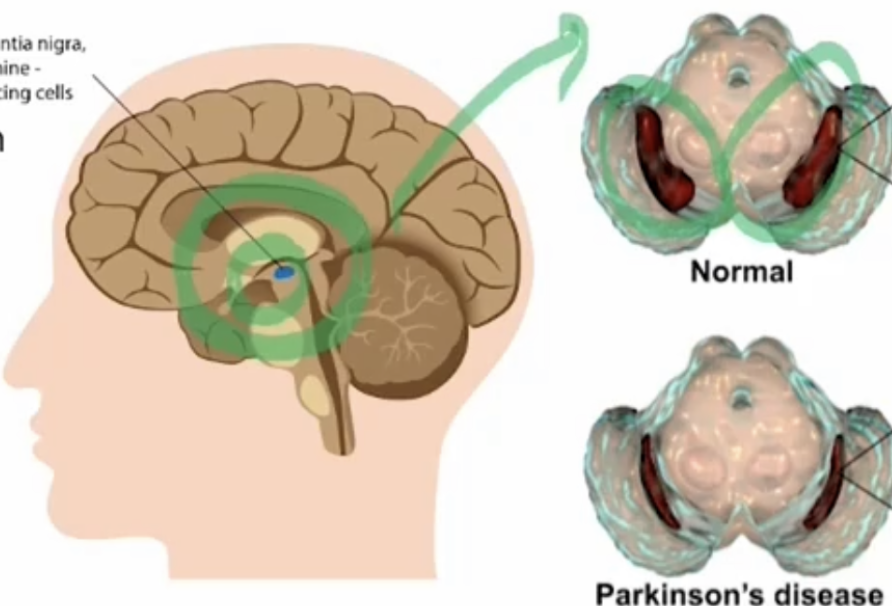
핵심개념정리
Descriptions/Pathophysiology: a neurodegenerative disorder of the extrapyramidal system leading to the depletion of dopamine in the substantia nigra (basal ganglia)
-
Substantia nigra (basal ganglia) - a motor control center for involuntary movement
-
Dopamine is responsible for inhibitory function to the motor cortex
-
Principle pathologic feature is degeneration of dopaminergic pathways → relative excess of cholinergic activity → imbalance of excitatory and inhibitory circuits
-
Causes unknown with most cases idiopathic; 150% more in men; peak age 85-89
Manifestations
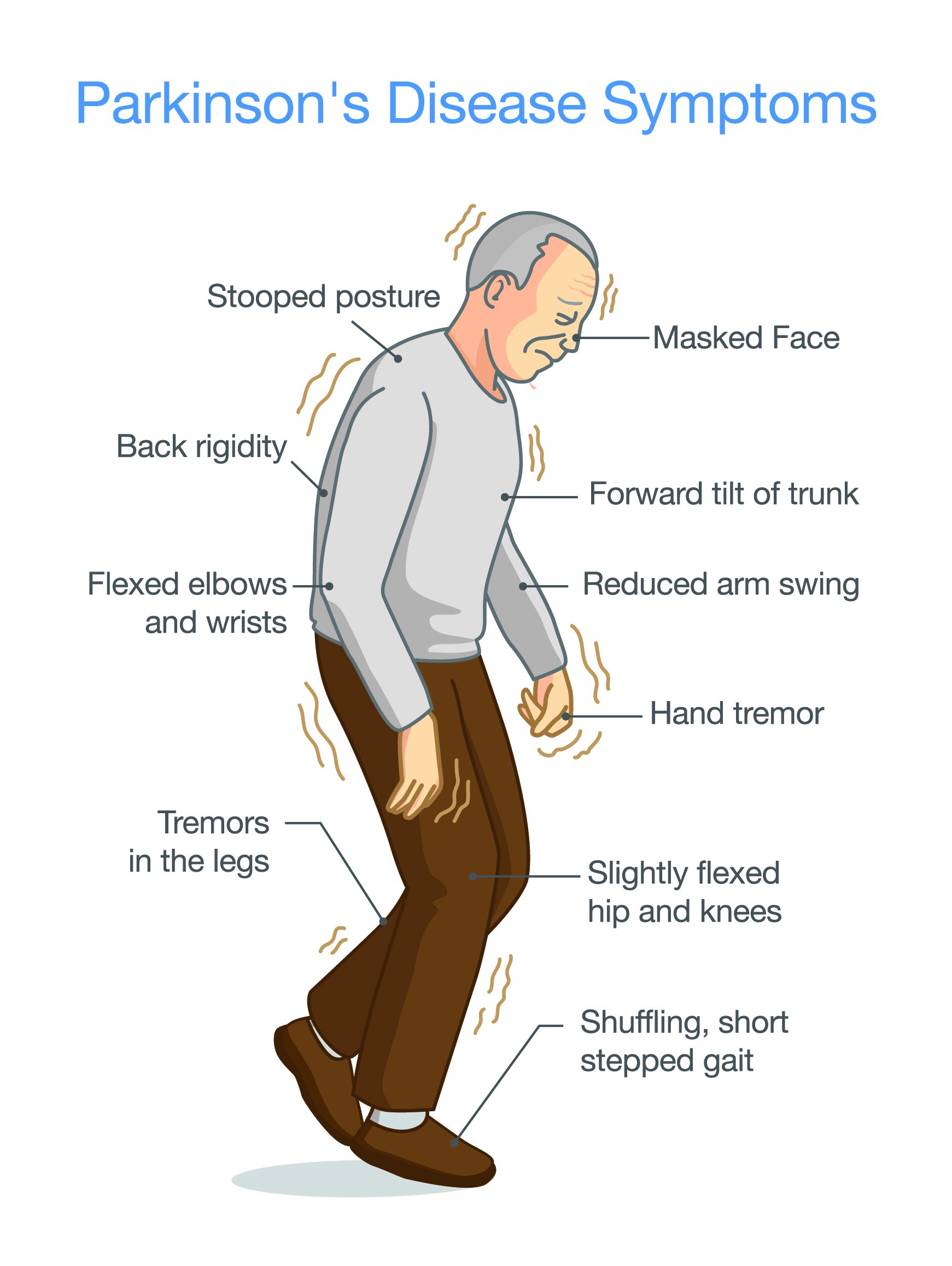
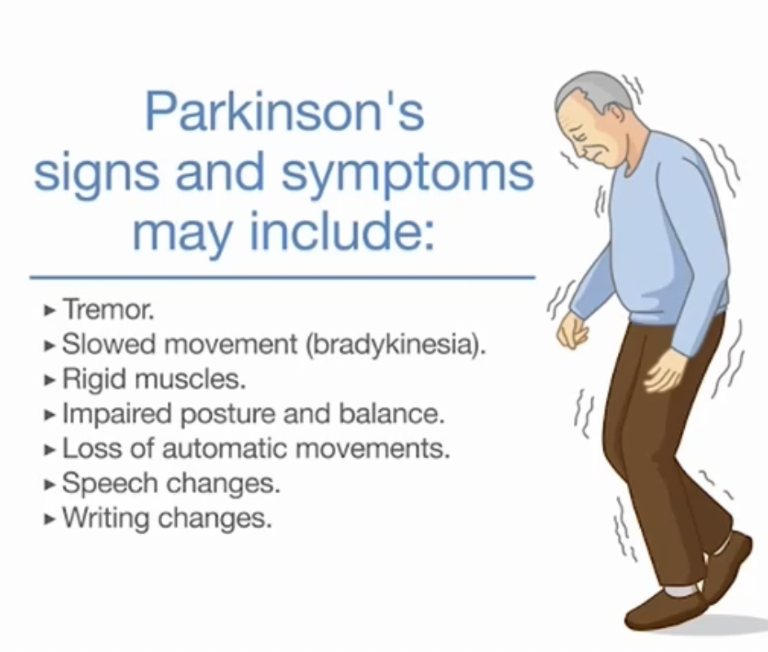
TRAP = four cardinal diagnostic symptoms
· Resting Tremor: first s/s, disappears with voluntary movement
· Rigidity: cogwheel rigidity with beef jerk
· Akinesia/Bradykinesia: cannot initiate movement readily
· Postural instability: hurried/shuffling, short stepped gated
Akinesia of facial muscles -> masekd facial expression
Difficult swallowing/speaking -> drooling, risk of aspiration
Impaired balance and coordination -> tendency to stoop, shuffle while walking, and an increased risk of falls
Treatment
-
No therapy stops disease progression
-
Carbidopa/levodopa - most effective for motor symptoms
- MOA: increasing dopamine in CNS; side effects include increasing cardiac irritablity
- Abrupt withdraw or delaying dosing
- Skeletal muscle rigidity that can interfere with respiration
- Neuroleptic malignant syndrome (Parkinsonism-hyperpyrexia syndrome)
-
Amantadine - antiviral agent
-
Surgical treatment
- Streotactic surgery for treatment of tremor
Levodopa: converted to dopamine in the brain → increasing dopamine
Carbidopa: prevents breakdown of levodopa before reaching the brain
-
Nursing considerations
-Educate patient to change positon slowly
-Implememnt fall precuations
-Education patient to expect discoloration of body secretions (urine, perspiration, saliva) to red, brown or black (harmless)
-Education patient to not discontinue medication abruptly
학교에서는 약이 이렇게쓰이고, adverse effecrs위주로 가르쳐주고 배웠는데 이렇게 드림널스를 통해서 실제 nurse로서 가장중요하고 지켜야할 nursing consideration까지 연결해서 배울수있어서 더 도움이되고 좋았다!
[출처] https://blog.naver.com/kimmiri0077/224257557550


통신판매업신고번호 : 2024-서울서초-0152 | 출판사등록번호 : 제2019-000285호 | 개인정보관리책임자 : 김진선
주소 : 서울특별시 서초구 논현로31길 41, 5층(양재동, 세원빌딩) | 이메일주소 : dreamnurse7@naver.com
문의사항 : 드림널스 홈페이지 우측 하단 채널톡 문의 또는 카카오톡 채널 드림널스 문의 Copyright (c) 주식회사 드림널스 All Rights Reserved.
호스팅 제공자: 주식회사 맑은소프트