


 로그인을 해주세요
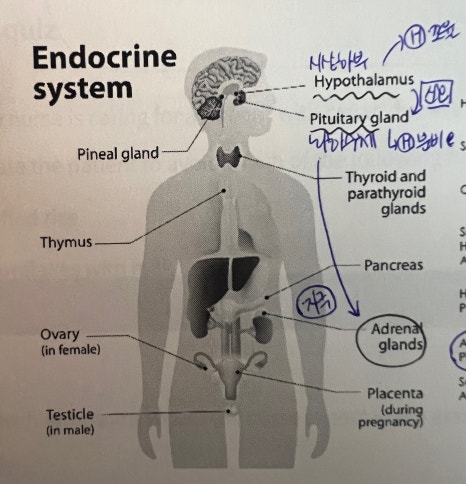
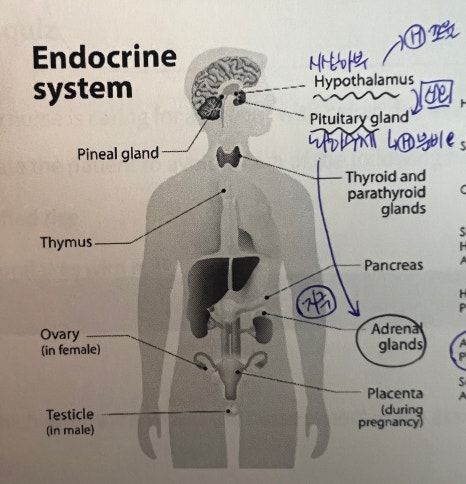
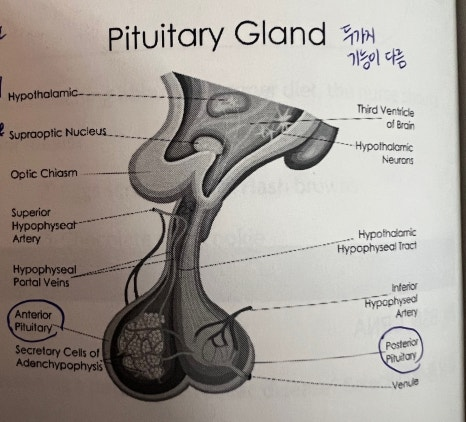
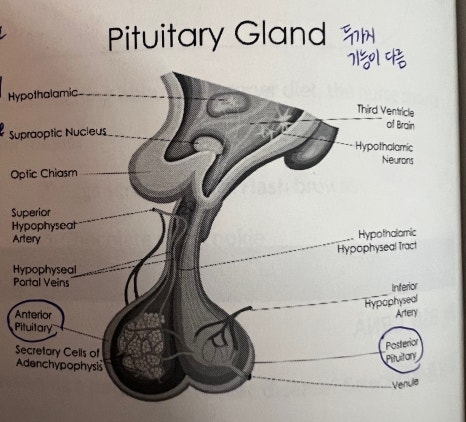
1. Pituitary Gland
1) Functions
Is connected to the hypothalamus
2) Anterior Pituitary
Follicle-stimulating hormone
Adrenocorticotropic hormone
- Luteinizing hormone
- Thyroid stimulating hormone
- Growth hormone
- Prolactin
3) Posterior Pituitary
- Antidiuretic hormone
- Oxytocin
2. Adrenal Gland
1) Function
<Adrenal Medulla>
- Secretes 80% epinephrine, 20% norepinephrine = Catecholamine
- Activated by Sympathetic Nervous System (fight or flight)
<Adrenal Cortex Hormones (stimulated by ACTH)>
#1 Glucocorticoids (Cortisol)
- Cortisol, cortisone, corticosterone
- Cortisol (hydrocortisone) secreted in highest amount & most important
- Impact metabolism in cells & prepare body for long-term stress
#2 Mineralocorticoids (Aldosterone)
- Aldosterone regulates plasma volume, promoting Na+ reabsorption & K+ secretion by kidneys
#3 Gonadocorticoids (Androgen)
- Mostly Androgens (male), small amounts of estrogen
- Lower levels compared to testes & ovaries
"Corticosteroids": collective name for glucocorticoids & mineralocorticoids
3. Cushing Syndrome (Too much ACTH)
1) Cause
- Occurs when there is an excess of adrenocorticotropic hormone (ACTH) → excess of corticosteroids including cortisol, aldosterone, and androgens.
- Increased ACTH levels lead to the manifestation of glucocorticoid, mineralocorticoid, and androgenic effects.
2) Causes of overproduction: Pituitary tumor, Adrenal tumor
3) Exogenous causes: Overdose of steroid medications
2) Symptoms
<Glucocorticoid Effects>
- Hyperglycemia
- Hypertension (vasoconstriction)
- Weight gain = fat gain (central obesity, buffalo hump, moon face)
- Body image change depression, anxiety, mood disorder
- Increased risk of infection (Immunosuppresion)
<Mineralocorticoid Effects>
- Hypertension (water/sodium retention)
- Hypokalemia
- Metabolic alkalosis
<Androgenic Effects>
- Women become masculinized (hirsutism = facial hair, hair thinning, acne, amenorrhea
- Men become feminized (gynecomastia, impotence)
- The best method to assess cortisol levels is through the measurement of 24-hour urinary free cortisol
3) Diagnosis
- History and physical examination
- Measurement of ACTH and Cortisol level
[ 헷갈린 부분 ]
-
뇌하수체와 부신 호르몬을 정리하면서 후엽에서도 호르몬을 직접 생성한다고 생각했지만, 학습을 통해 후엽은 시상하부에서 생성된 ADH와 옥시토신을 저장하고 분비하는 역할만 한다는 것을 알게되었습니다. 이를 통해 전엽은 ‘생성 및 분비’, 후엽은 ‘저장 및 분비’라는 기준으로 구분할 수 있게 되었습니다.
-
쿠싱증후군을 처음에는 단순히 코르티솔 증가만으로 이해했지만, ACTH와 코르티솔의 관계를 함께 생각해야 한다는 점을 알게 되었습니다. 특히 뇌하수체 종양에서는 ACTH가 증가하고, 부신 종양이나 외인성 스테로이드 사용 시에는 코르티솔은 증가하지만 ACTH는 감소할 수 있다는 것입니다. ACTH ↑ → Cortisol ↑ → 증상 발생으로 이해하게 되었습니다!
[ 문제 ]
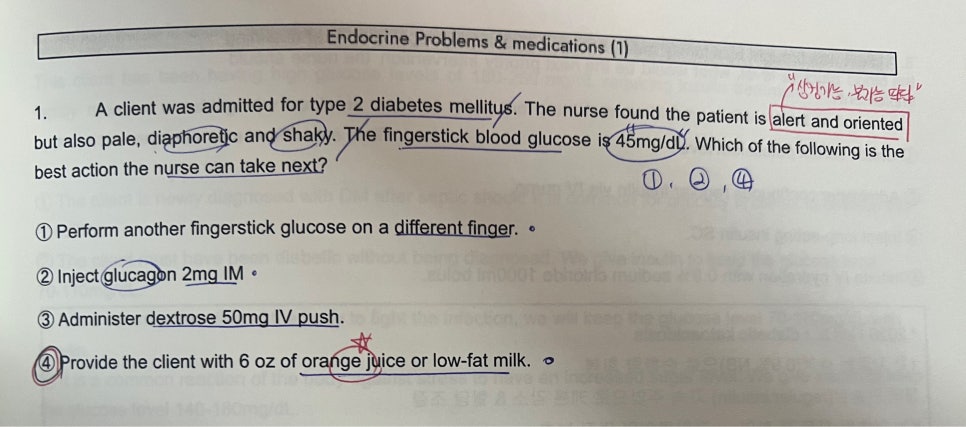
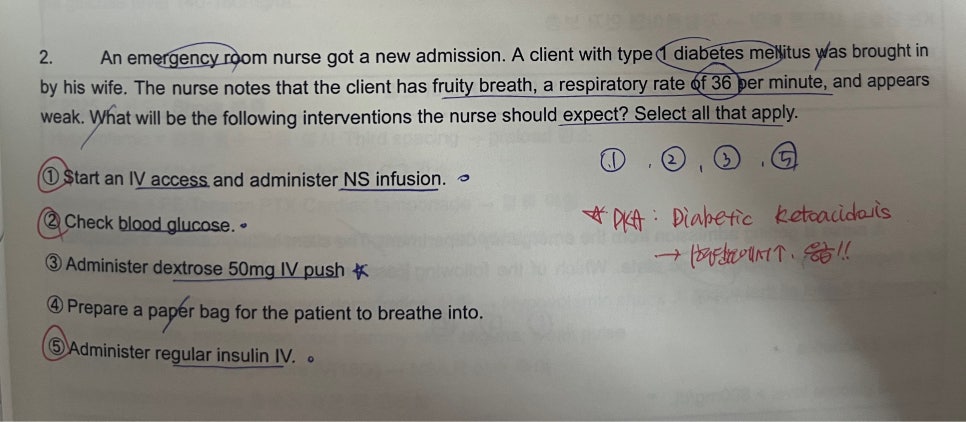

<내 풀이> 1, 2, 4번
1) 반대편 손에서도 혈당을 측정하여 맞는지 재확인 -> 정답
2) 글루카곤 투여 -> 혈당 상승 -> 정답
3) 틀림
4) 의식이 있으니 오렌지주스 먹이기 -> 정답
<정답> 4번
4) alert, oriented -> 의식이 명료하기 때문이 삼킴이 가능한지 불가능한지 판단이 가능하기 때문에 4번이 정답
[ 9주차 느낀점 ]
이번 학습을 통해 단순히 내용을 외우는 것보다 개념 간의 관계를 이해하는 것이 훨씬 중요하다는 것을 느꼈습니다. 처음에는 호르몬 종류와 기능이 비슷하게 느껴져 헷갈렸지만, 각각의 역할과 기전을 연결해서 정리하니 내용이 더 명확하게 정리되었습니다. 특히 뇌하수체 전엽과 후엽의 기능 차이, 부신피질 호르몬의 역할 구분, 쿠싱증후군에서 ACTH와 코르티솔의 관계를 함께 이해하게 되었습니다!
[출처] https://blog.naver.com/kxnmin/224273524265


통신판매업신고번호 : 2024-서울서초-0152 | 출판사등록번호 : 제2019-000285호 | 개인정보관리책임자 : 김진선
주소 : 경기도 수원시 팔달구 인계로 166번길 48-21, 515호 | 이메일주소 : dreamnurse7@naver.com
문의사항 : 드림널스 홈페이지 우측 하단 채널톡 문의 또는 카카오톡 채널 드림널스 문의 Copyright (c) 주식회사 드림널스 All Rights Reserved.
호스팅 제공자: 주식회사 맑은소프트